 Curio Class
Around the World With a Chilli
Nayan Chanda

The
sun had just dipped behind the coconut, mango and chiku trees that ring Appu’s
house. The sky was still tinged with pink. The kitchen garden where the family
grew brinjals, tomatoes and bottle gourd was still bathed in a soft light.
Flocks of birds flew across the sky on their way home.
Appu’s mother was making fish curry for dinner
and wanted some fresh green chillies. Twelve year old Appu had gone to the
garden to pick some fully grown, shiny green chillies when he was startled to
hear a deep voice, “I am so glad your family likes my offerings.”
Appu’s
hair stood on end. He turned around to see who had sneaked up on him. The heavy
but soothing voice seemed to come out of the knee-high, leafy chilli plant.
“Don’t be frightened, I am Ajar Uchu, known as the Spirit of Chillies,” it
said.
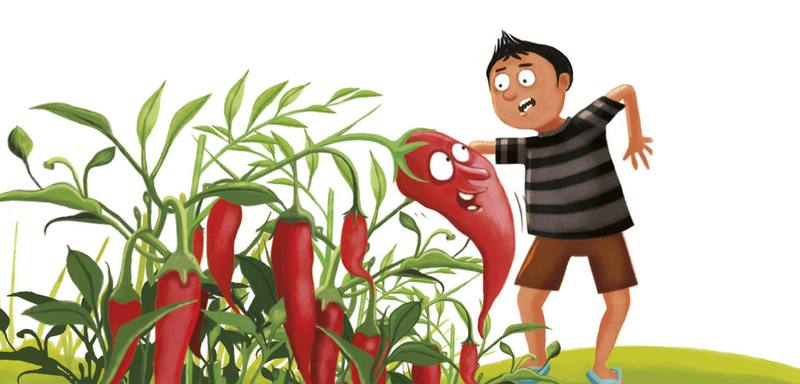
“You water the plants every evening and take care of them. I am so happy to be loved and admired. I am tens of thousands of miles away from home, and so your care means a lot to me.”
Appu
took a few moments to recover from the shock of hearing a voice from the plant.
Appu asked, “Where do you come from?”
“From very, very far, from the Americas. More precisely, from Mexico,” Ajar Uchu answered.
Appu had no idea where Mexico was. Before he could ask for more details his mother shouted from the kitchen, “Appu, please bring the chillies in now.”
Ajar Uchu said, “You have to go now, I suppose. Come back tomorrow and I’ll tell you more. But please don’t tell anybody about our conversation. I’ll tell you the story of our journey to India and all over the world.”
Still
dazed, Appu nodded and ran off. This little plant in the back garden came from
far-off Mexico!
“What took you so long?” Ma
asked. Appu remembered what Ajar Uchu had said. “Oh...I spotted so many
tomatoes that have grown on the plant since I last looked,” he said. He would
learn later how the tomato plant too, had come from the same place as the
chilli.

Appu
did not linger to taste the few pieces of fish that Ma had just fried. He ran
off to his room and picked up the small globe that he had received on his last
birthday. Impatiently, he turned the globe to see where South America was. It
was on the other side of the globe. He quickly found the country that Ajar Uchu
had mentioned: Mexico. Amazing! Appu thought.
The
next day seemed to drag for Appu. He went through his classes distractedly,
finished his homework early in the evening with only one thought on his mind –
the talking plant. Just before sunset he filled up the watering can and walked
to the garden.
He watered the egg plants,
spinach, tomatoes and bottle gourd vines before coming to the chilli. Just
after he had emptied the watering can on the chilli plants laden with bright
green pods, some even turning red, Ajar Uchu spoke, “Ahh! So refreshing after a
hot day! Thank you Appu.” Appu eagerly knelt down to listen to the story.
“Thousands
of years ago,” Ajar Uchu recounted, “Inca gods reigned over the vast mountains
and forests that lay over South America. They sent four brothers to help the
people who lived there. The Inca people grew maize, potato, avocado, tomato and
many other fruits and vegetables.” Ajar Uchu
was one of the brothers sent by the gods to ‘pepper up’ the life of the people.
His spirit inhabits the chilli plants which became one of
the most loved of the fruits.
“Yes,” the voice told Appu, “chilli is actually a fruit, even though
you may think of it as a vegetable. Although it is not sweet like other fruits,
it produces seeds from which new chilli plants grow. That way the spirit of
Ajar Uchu continues to live. Chilli became very popular as a condiment to spice
up the region’s bland food of corn flour and potatoes. The kings demanded that
Aztec and Inca people pay tribute with a supply of ripe and dried chillis.”
“What
is a tribute?” Appu asked.
“It’s a kind of tax people pay
to the king,” Ajar Uchu explained.
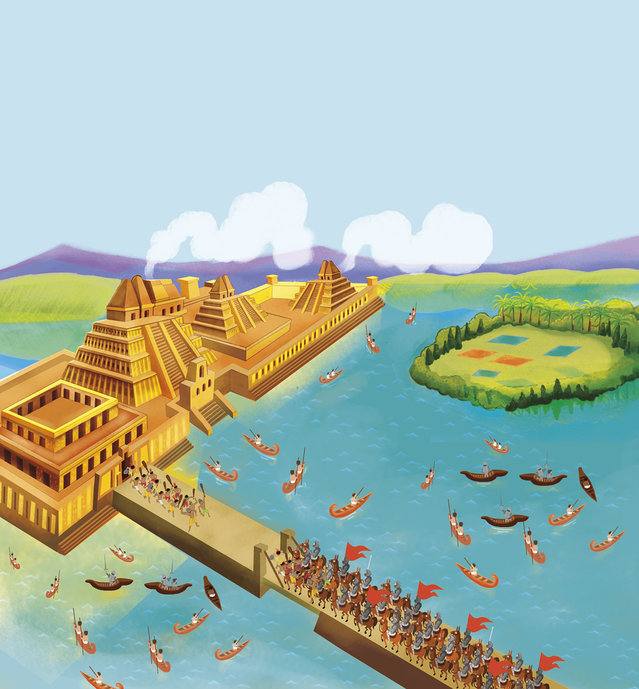
Aztec and Inca Empire
In what is now Mexico there was an older civilization created by the Aztecs. They spoke a common language – Nahuatl. Some 700 years ago they organized themselves into an empire. They had developed a rich agriculture growing corn, chilli pepper, avocado and other fruits. They also grew fine cotton to weave beautiful clothes and had plentiful gold to make jewelry.
In the middle of a lake they built Tenochtitlan, their capital city.
The Spaniards conquer the Aztec capital of Tenochtitlan
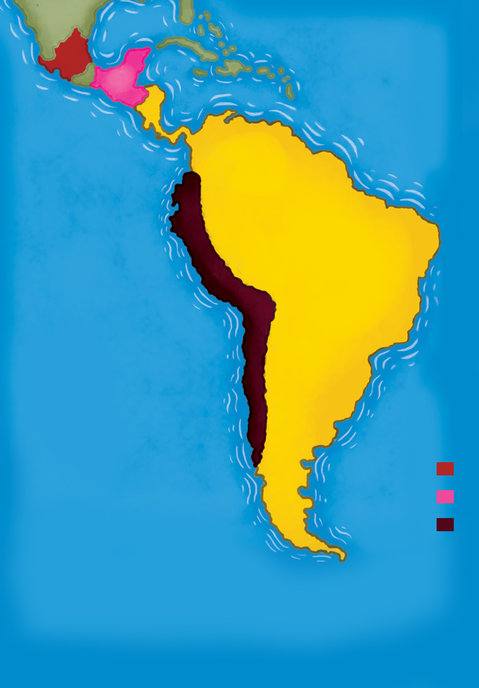
Further south on the Andes mountains (today’s Peru) lived another people – the Incas – who worshiped the sun god, and believed one of his sons was Ajar Uchu. They built a large empire that eventually extended almost down to the southern end of South America. The powerful Inca kings collected tribute from the people in gold and produce like chillies, and as labour.
The Incas did not know how to make wheels, yet they built 25,000 miles of roads!
They carried heavy stones to build large monuments, rolling them on logs.
Maybe they did not need wheels for carts as they had no horse or buffaloes to pull them – they had only goat-like llamas as pack animals.
Aztec
Maya
Inca
Map of Aztec-Inca empire to the left. Map not to scale.
“All this is interesting,” Appu interjected, “but how did you travel from your country to India?”
On the globe, Appu had noticed the vast oceans and the African continent that separated India from Mexico. The voice said, “That’s a long story. The
foreigners who came to our ancestral land and helped to take the chilli plant
all over the world actually came there looking for a way to get to India. One
day, over five hundred years ago, three sail ships sent by the King and Queen
of Spain showed up in our neighborhood. Led by an Italian captain named
Christopher Columbus, they had crossed the Atlantic Ocean hoping to find a
shorter route to India. They had no idea that the huge American continents and
the Pacific Ocean stood in the way.”
“Why did they want to come to India?” Appu asked.
Ajar Uchu chuckled, “Because India was the place that grew pepper, what you call kali mirch, and Europeans loved to season their food with it. Columbus, in fact, had brought some kali mirch with him to show people what he was looking for. He was convinced that he had reached India and he called Aztec, Inca and other local people he met Indians .”
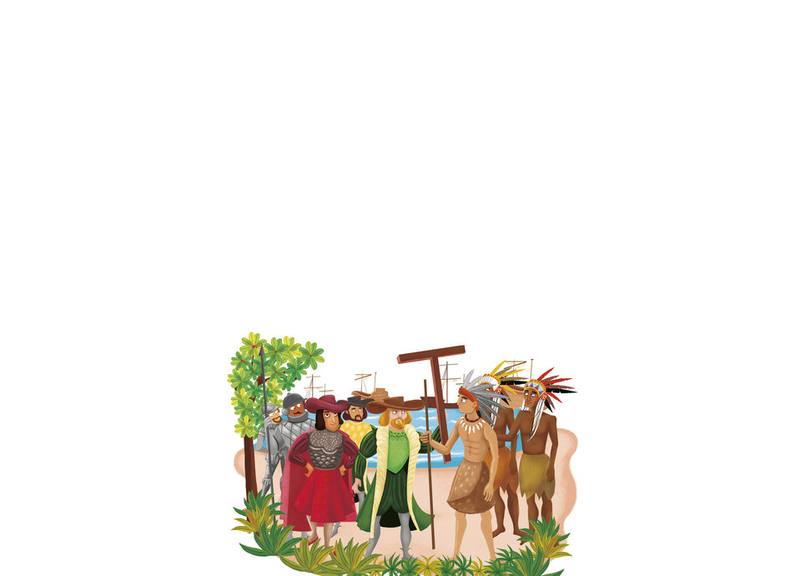
“Oh, that’s who the Red Indians are!” Appu exclaimed, surprised and pleased at his own discovery. “Columbus was very disappointed that those Indians had no black pepper to sell. But they showed him varieties of chilli that people grew. He tasted them and found they were as pungent as Indian pepper. He called that tiny fruit chilli pepper and stuffed his bags to take it back to Spain,” said Ajar Uchu.
Appu was amused by the thought that Columbus came to look for kali mirch and took home hari mirch and lal mirch instead!
Christopher
Columbus meets the ‘Indians’!

The
next day Appu greeted Ajar Uchu after watering the plants. Appu was thrilled
when he said, “Ah! I must tell you more about the Age of Discovery.”
That sounded almost as exciting
as a new computer game! Dimly a large map of the world began to take shape and
the countries of Portugal and Spain and their ocean ports began to glow.
“The Europeans’ love for Indian pepper,” Ajar Uchu explained, “goes back two thousand years. As early as the time of the Roman empire, wealthy people loved to spice their meat dishes with fragrant pepper. And they were willing to pay a high price for a few grams of the spice. Courageous Arab and Greek sailors set out for Kerala across the Arabian Sea to buy black pepper in exchange for other goods and gold coins and made a large profit reselling them to the rich people in Europe.”
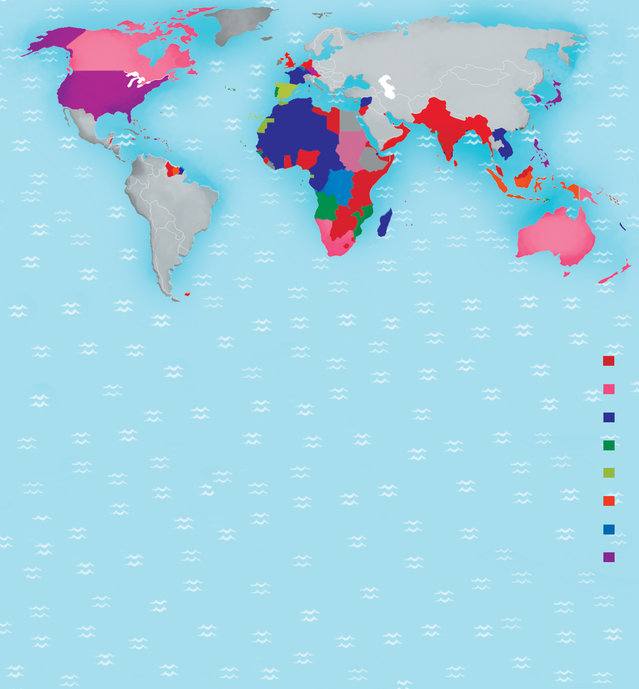
European Empires
Europeans had long enjoyed spices imported from India by the Arabs. The Portuguese and Spaniards developed sea-worthy boats and navigational tools that made it easier for them to sail the open ocean and they set out for India by going through the Atlantic.
United Kingdom
British
Dominions
France
Portugal
Spain
Netherlands
Belgium
United
States
Map of the
world’s empires
i n 1945 .
Map not to scale.
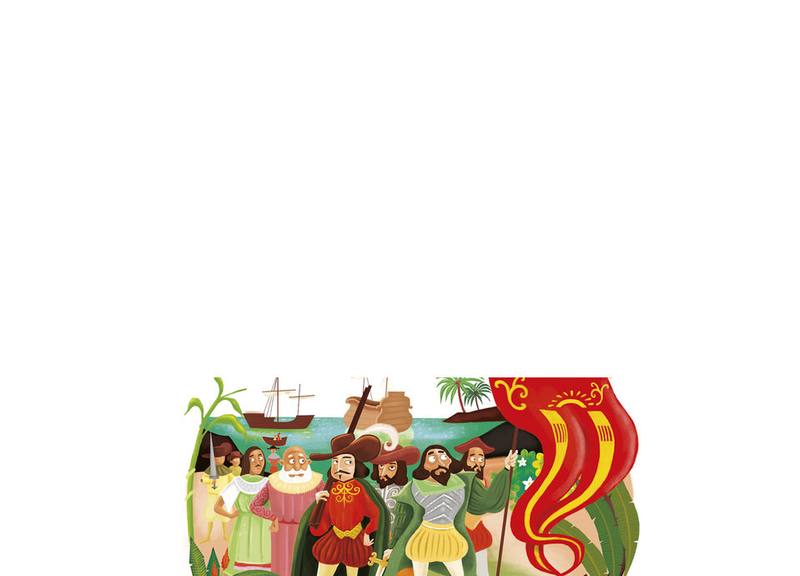
Christopher Columbus ended up in America (1492) and Vasco da Gama in India (1498). They set up trading posts and then gradually colonized entire countries through power of arms and cunning. Greedy for territories rich in agricultural and mineral resources, the British, Dutch, Belgians, French, Danes and Italians also started carving up the world into colonies. To avoid conflict among Christian countries, the Pope even drew an imaginary line on the globe allowing Spain and Portugal to take control of land on either side of the line. The line was ignored when the British and Dutch joined the fray. Until India won independence in 1947, India was the crown jewel of the British colonial empire.
Christopher
Columbus lands in the Caribbean island of San Salvador
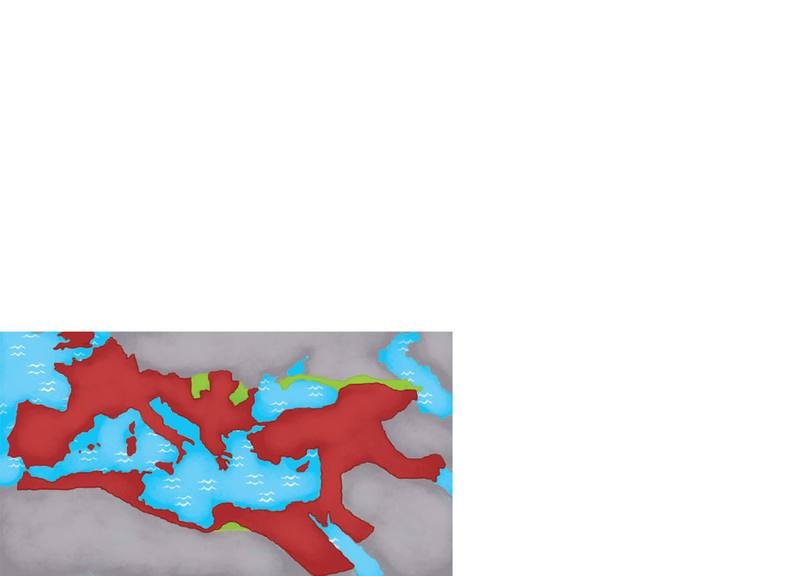
The Roman Empire
From a small city state founded near today’s Italian capital, Rome, an empire grew through conquests and ruled a vast territory for nearly 500 years. The Roman empire had people of many ethnicities and languages as its citizens. One Roman emperor was even of African origin. Peaceful and organized civilian life was made possible by an elaborate legal system.
The Roman Empire spread around the Mediterranean Sea, 117 CE. Map not to scale.
The wealth created by taxes was used to maintain a large army and for luxuries for the ruling class. Many imported items like Chinese silks and Indian spices were most popular.
Many
imported items like Chinese silks and Indian spices were most popular. After
the Roman Empire spread to today’s Egypt, trade with India blossomed. Large
amounts of gold and silver coins were sent to India to buy spices. The
importance of spices for a luxurious life can be seen by the silver pepper pots
the Romans used to store precious pepper. A special spice market was built in
Rome, and the city’s most fashionable street was named Pepper Street.
Why
were the Europeans crazy about pepper? The ordinary round grains of black
pepper that people buy at the village grocer’s shop for a few rupees were sold
for kilograms of gold. Why? “It was the rarity of the item,” said Ajar Uchu.
Traders brought it from a very far and mysterious land. They traveled for
months across the perilous ocean and then on camel caravan across vast deserts.
Pepper not only made the food tastier, they found it also had medicinal value.
Most importantly, pepper was the most precious commodity that you could use to
show people how rich you were. Kings and aristocrats put small quantities in
dainty little satin bags and gave them away as party favours. So, when Columbus
promised the Spanish king that he would make him the ‘Lord of the Spices’, it
meant he would be recognized as a very wealthy monarch.
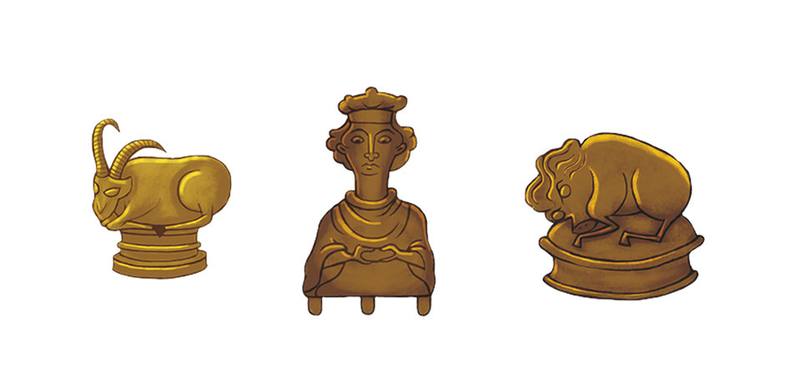
But with the rise of the large Islamic Ottoman Empire in eastern Mediterranean which controlled the trade routes to India, Europe’s pepper lovers were at a disadvantage. By the 15th century, ship-builders had learned how to build sturdier ships which could take better advantage of wind on their sails. The knowledge of oceans too had grown. But still the vast body of water and what remained on the other side was a mystery.
Silver pepper pots
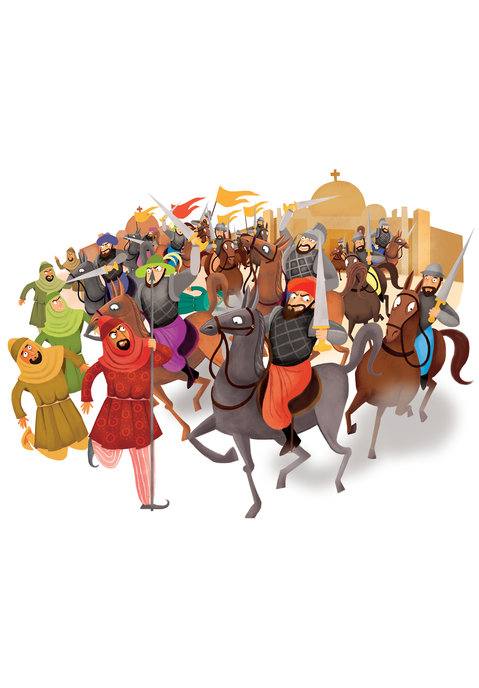
The Ottoman Empire
Inspired by Islam, a nomadic Turkic speaking people from
Central Asia under the leadership Osman Bey, set out to conquer land from the
non-Muslims. His successor Mehmed II, led a victorious army to capture
Constantinople, capital of the Byzantine empire in 1453. In subsequent
centuries, the Turkish Ottoman (the name emerged from the founder Osman) empire
emerged as the biggest Islamic empire, covering territory from northern
Mediterranean to Egypt and Yemen.
The Ottoman capture of Constantinople
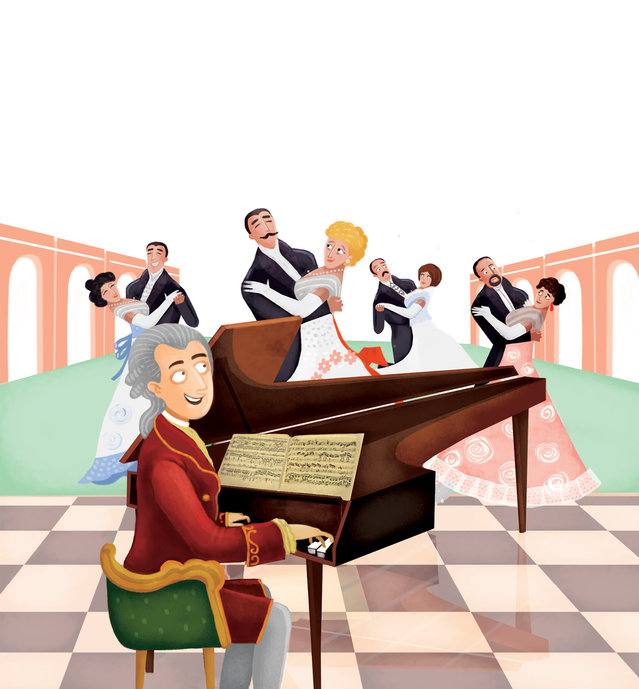
Although devout Muslims, the Turkish sultans employed
experts from different religions to build a strong economy. The Turkish army
developed an elaborate marching band using bass drums, triangles and cymbals –
instruments that were incorporated into Western classical music and even
inspired Mozart. The Turkish army also unwittingly introduced Europeans to
coffee when they left sacks of coffee bean while abandoning their siege of
Vienna.
Wolfgang Amadeus Mozart, the Western classical music composer
Seafaring, compass, boat building
Europeans were compelled by the rise of the Ottoman empire to find a different route to India and by this time their knowledge about the ocean and navigation technology had grown. The Portuguese, who were pioneers in seafaring had developed better maps and astronomical knowledge enabling them to sail down Africa’s Atlantic coast. They hoped to make it to Kerala, the land of spices, across the Indian Ocean from the tip of Africa. Previously, Indians and Arabs made boats by sewing planks of teak with coir. Arab sailors discovered how to ‘tack’ against the wind using triangular lateen sails. Europeans also learned from the Chinese the use of the rudder to manoeuvre a boat.
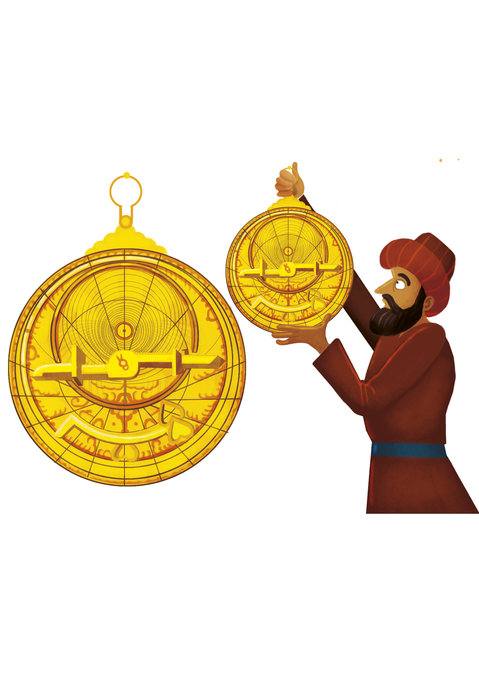
Astrolabe,
a instrument that helped sailors to navigate on the high seas
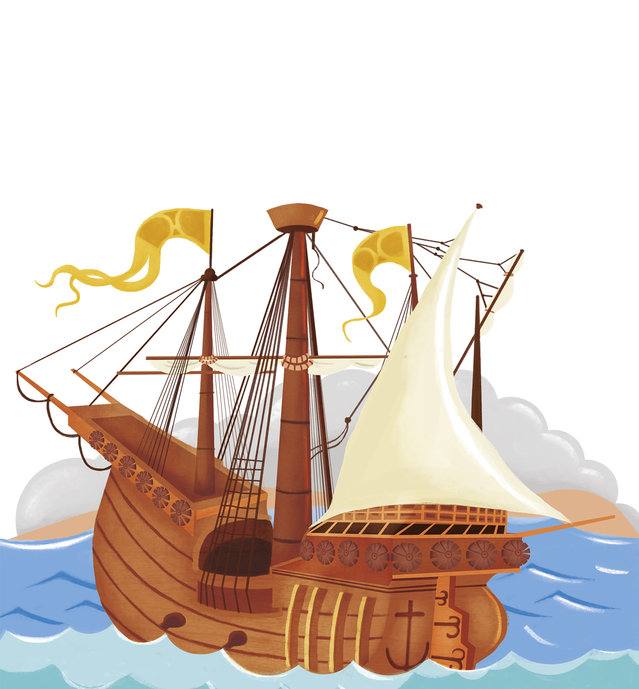
To navigate without sun, moon or stars the Portuguese
developed a fine mariner’s compass from a crude magnetic compass originally
invented by the Chinese. Europeans also developed the astrolabe to more
accurately gauge their position in the high seas. As they sailed, guided by the
compass, they reeled out long ropes with knots at a specific distance to
measure how far and fast they moved. That is
why to this day, steam and diesel-powered boats still measure their voyages in knots rather than miles or kilometre.
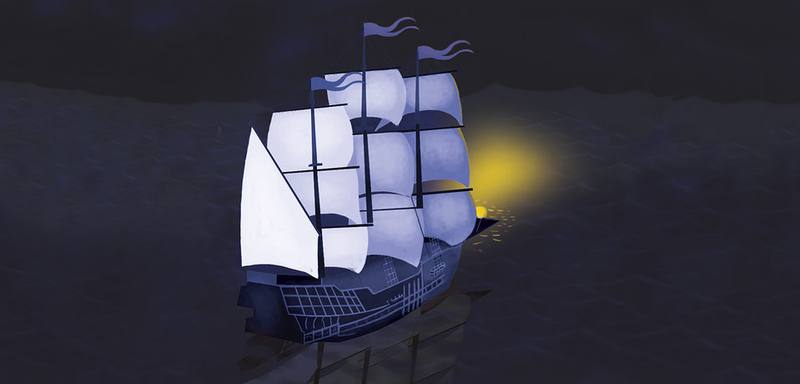
“Imagine going out with a torch on a dark
night,” Ajar Uchu said. “When you switch on the light it shows you a few feet
of the road and dimly lights whatever is on both sides. But beyond the narrow
circle of light everything is dark and unknown. That is how the sailors felt
when they set out on the open ocean. Over the years map makers stitched together such narrow views gathered by seamen to give a bigger picture.
There
were more areas marked as unknown than known. Apart
from not knowing what lay ahead, sailing in the ocean was full of risks. In a
storm, the waves were taller than a three-storeyed building and could easily
swallow the ships. And they often did. Thousands of men drowned or were
shipwrecked. And yet they never stopped trying to cross the seas to find what
was on the other side. Why?
There was no shortage of
moneyed men either who would take the gamble of paying for such adventures.
They hoped that the spices or gold or silver that the returning sailors brought
with them, would bring them more money than they spent. The Europeans,
especially Spaniards and Portuguese monarchs wanted to benefit from the
lucrative trade by sailing directly to India. The Portuguese tried to go down
south along the Atlantic coast of Africa and find a way to head east towards
India. The attempt to find a route to the spices and riches of India led to
dozens of shipwrecks and loss of thousands of lives. But in the end, these
attempts brought the Portuguese sailor, Vasco da Gama, to India.”
“You
already know about a ship captain from the Italian city of Genoa, Christopher
Columbus. He reasoned that since the earth was round if he journeyed west on
the Atlantic pushed by seasonal winds he could reach Japan and India pretty
quickly.
Apart
from the total ignorance of the land that lay on the other side of the Atlantic
Ocean, Columbus made a serious miscalculation which proved very fortunate.
Columbus made a wrong calculation about the size of the earth,” Ajar Uchu said.
“He
thought it was much smaller than it actually is. If he had known the real
distance between Europe and the Asian continent he might have given up the
attempt.
To be on the sea to cover a huge distance would not only require more food and water but also a larger crew and a much bigger ship. Columbus finally convinced the Spanish Queen, Isabella, that the journey to Asia across the Atlantic would be shorter than the route the Portuguese were trying. With her blessing and money, in the spring of 1492 Columbus set out in a convoy of three small ships – Santa Maria, Nina and Pinta to an unknown destination.
After several weeks of sailing south west on what seemed to be an endless ocean the crew was getting worried about food and water.
Finally
on a moonlit night, the sailor who kept watch from the top of the tall mast,
cried, “Land, land!”
In the morning grateful sailors landed on a territory that no Europeans had set foot on before.
They were met by curious people wearing no clothes, speaking a
language that nobody understood. This was San Salvador, a Caribbean island, but
Columbus was certain he had reached India. He thought the people who met them
at the shore were obviously Indians.
“The
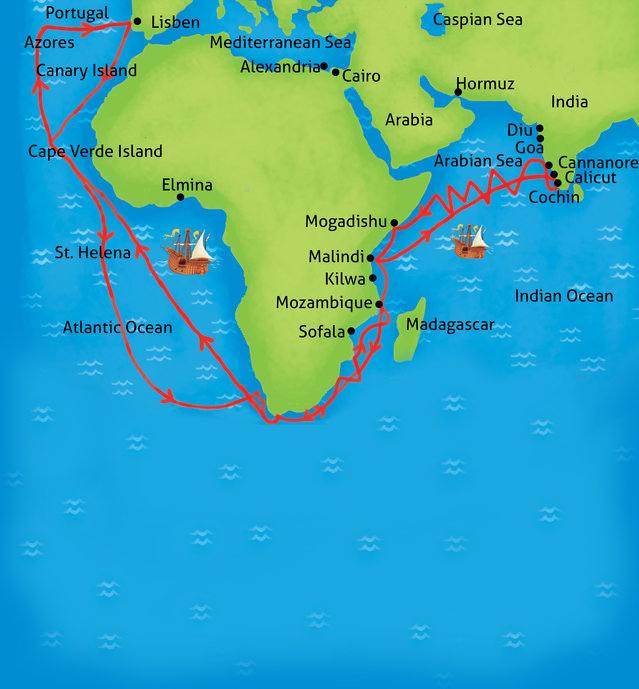
one who actually reached India, six years after Columbus’s voyage,” Ajar Uchu
continued, “was Vasco da Gama. He led a Portuguese fleet commissioned by the
King of Portugal. Four vessels and 170 sailors under his command rounded the
tip of Africa and their ten month long journey ended in Calicut. That was the
right place to get pepper!”
(Route of Vasco da Gama’s first voyage to India, 1497 to 1499.
Map not to scale.)

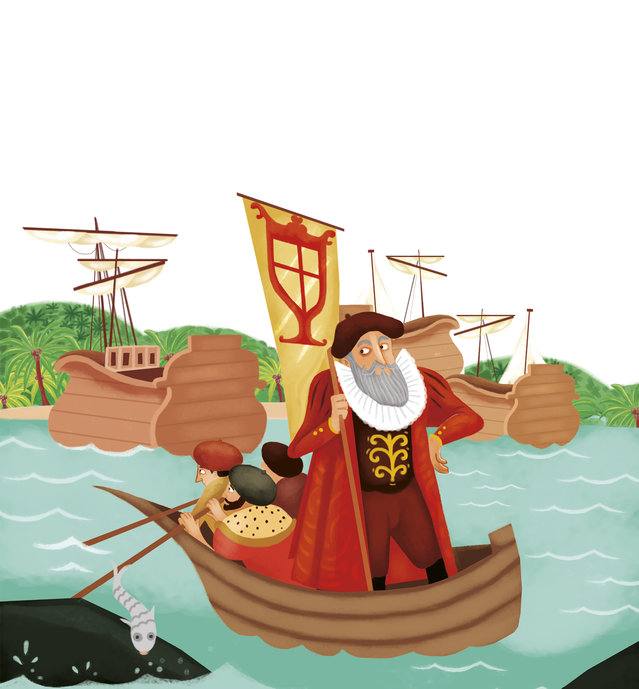
“Vasco
da Gama asked King Zamorin of Calicut, ‘Will you let me take some pepper plants
away to my country?’ Zamorin smiled and said, ‘Yes, you can take some plants
but you won’t be able take our sun and rain.’ The Portuguese soon found out the
truth of those words. Instead of importing pepper, the Portuguese settled in
India, capturing Goa from a local ruler in 1510.
Goa was soon turned into a great
trading post shipping
tons of pepper to Europe. The King of Portugal and not that of Spain became the Lord of Spices.”
“In
a twist of fortune another Portuguese captain trying to reach India was blown
off course by winds in the south Atlantic and landed in the eastern coast of
South America. The land was called Brazil. The place was turned into a
Portuguese colony and Brazil proved to be the source of many new food items
that were introduced to India.
While
large sailing ships left Goa for Lisbon loaded with pepper, cloves, cinnamon
and other spices, the Portuguese started bringing in to India a variety of new
kinds of
fruits, vegetables and animals from South America. Brazil not only had chilli
and other new produce, the Spaniards found they also had new products like
pineapple, cashew nut – called caju – and rubber trees. Soon the ships full of produce from Brazil left for the Portuguese capital, Lisbon, to be transferred to ships that left for their long journey to Goa.
(Vasco da Gama reaches India)
One
of the names for chilli in Goa was ‘Pernambuco pepper’ after the Brazilian port
from which the shipment of chilli arrived.” Ajar Uchu paused and then said
dramatically, “Goa! That was the world’s gateway to India.”
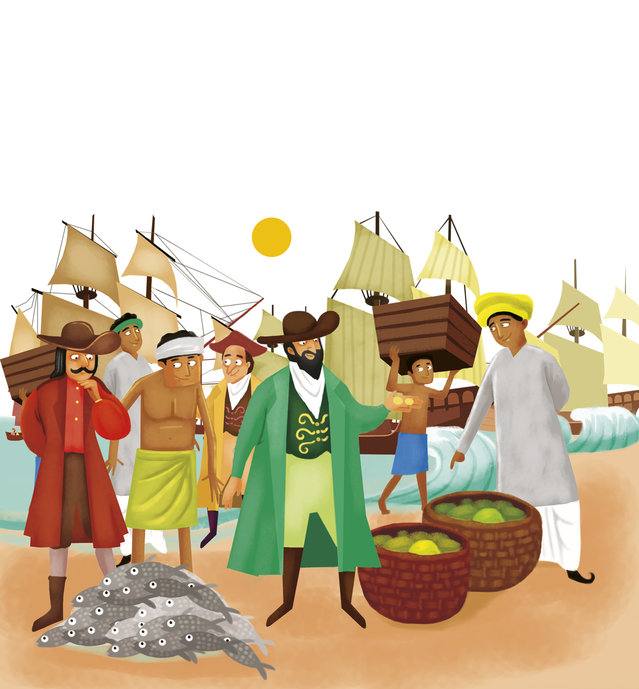
Goa glowed brightly and Appu
closed his eyes as he imagined the bustle at the sea port with many ships and
sailors in different outfits!
“When
chilli seeds arrived in Goa they were snapped up by traders,” laughed Ajar
Uchu, seeing Appu’s face. “It added so much flavor and taste to the food that
the hot chilli peppers were passed from hand to hand. They spread all over
western India and were known a Govai-mirchi.
It did not take long for different varieties of chillies – long, round, fat and stubby and of different colors – to spread all over India and Sri Lanka. Since there was active sea trade between Bengal and Sri Lanka chilli might have reached there from Sri Lanka. Maybe that’s why the Bengalis call chilli lanka ,”
mused Ajar
Uchu. “But did the chilli just stay in India? No, it traveled westwards!
Traders took chilli to Central Asia and Turkey and to Hungary. In Hungary a new
variety of chilli called paprika was developed. It became Hungary’s favorite
cooking ingredient making Hungarian paprika famous.”
“So, one of the earliest wild
plants to be domesticated by humans in far away Mexico nearly 9,000 years ago
became such a basic ingredient that a Spanish priest in the 16th century wrote,
‘Without chilli, Mexicans do not believe they are eating.’ It spread to so many
other parts of the world,” said Ajar Uchu.

In
this way, Goa became an exciting place of discovery! Every two weeks Emperor
Jahangir sent an official from his court to Goa to check on any new product
that might have arrived from the ‘New World’, as North and South America came
to be known. On one visit the official brought back pineapples and a
strange-looking bird – a turkey. Jahangir’s court painter was ordered to paint
these strange items. At the order of the Emperor a special garden was set up in
Agra to grow pineapples for the palace. The original Brazilian name for the
pineapple was ananas and that is how it was known in Agra too.
Potatoes which grew only in Peru in South
America were also introduced to the Mughal kitchen. When the British
ambassador, Sir Thomas Roe, was entertained to a banquet by the palace, the
main dish was made of the new root vegetable – potato. The ambassador who had
never tasted such a vegetable before, was charmed.
In
a country where a large number of people are vegetarian, the arrival of new
produce like corn, tomato, okra, red beans, sweet potatoes, peanuts and avocado
proved a great boon. Not only vegetables but a whole new range of fruits also
made their appearance. Papaya, litchi, guava, custard apple, chiku or sapota
(its original name in Mexico is Chicosapotee) added to India’s already rich and
varied food basket.
(Traders at a Goan port)

“Foreigners must also have taken things that
grew here,” reasoned Appu.
“Of course,” said Ajar Uchu.
“Europeans’ craze for Indian pepper initiated the search for new sea routes.
And once they reached here the Portuguese found the irresistible mangoes and
coconuts and planted them in Brazil. Now mango is a major summer fruit in
Brazil and Mexico.”
“But, long before the Portuguese landed here, India supplied another crop that made its way to the Caribbean Islands and South America and made them rich. That was sugarcane.
Sugarcane was brought into India a long time ago from Southeast Asia and Indians developed ways of turning the cane juice into sugar. Chinese Buddhist monks who came to India in the seventh century were intrigued by what they called ‘sweet rock’. China’s powerful emperor Taizhong sent an embassy to the court of Emperor Harshavardhan requesting him to send craftsmen who could teach the Chinese how to make sugar. Along with some Buddhist monks, two sugar makers travelled to China to introduce sugarcane and sugar making. Sugar was one of the key items of Indian export to the Middle East. Arab traders took sugarcane and introduced it as a crop in the island of Cyprus in the Mediterranean. Europeans loved sugar so much that the Spaniards saw a great business opportunity. They forcibly took slaves from Africa and developed huge sugar plantations and exported sugar all over the world.”
Appu was intrigued by the
thought. “So we gave South America sugar in return for chilli!” he exclaimed.
As
the sun reddened the sky and Appu knew that Ma would call him soon, Ajar Uchu
ended by saying, “You can see how our lives, and the food we eat are connected
to the rest of the world. Foods travelled without passports! The world is tied
together by the foods we eat.”
Appu’s
mind was racing back to the evening he first heard the voice of Ajar Uchu.
Indeed in his own backyard they grew not only chilli and tomato but also chiku
and papaya. Thanking Ajar Uchu for being his secret friend with the most
amazing stories, Appu went straight to his room, took out a sheaf of paper and
with his crayons he wrote in large letters ‘Vishwa bagicha’ - the garden of the
world. He took it down to show his mother saying that he wanted to hang that on
the gate of the garden.
Ma
was surprised. “Why?” she asked.
“It’s a long story. I’ll tell
you tonight when Baba comes home,” smiled Appu.