 Curio Class
Teaching Pa
Amrutash Misra
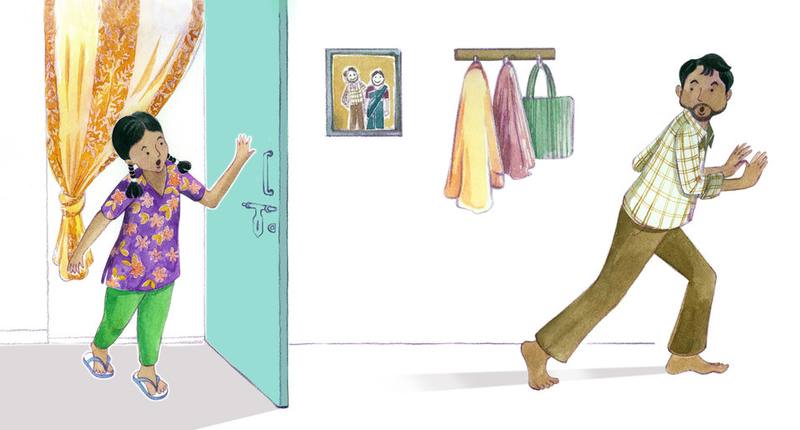
Diya came home after playtime with her friends.
“PAAA!” she called out.
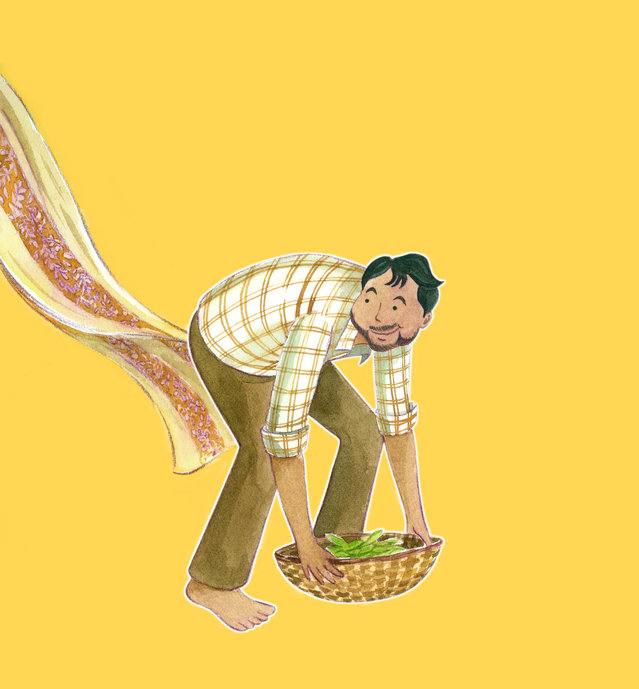
Pa ran into the kitchen.
He hurriedly picked up a basket of peas and started to shell them.
Pa had never gone to school. So Diya had taken it upon herself to teach him.
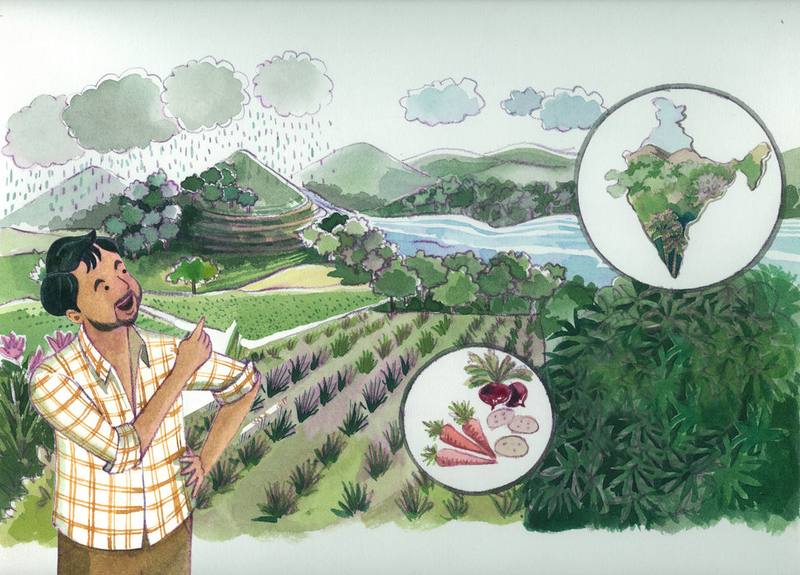
Of all the subjects, Pa enjoyed geography the most. He liked topics related to farming - soil, crops, rainfall, rivers and maps.
(Map of India on pg 5 not to scale. Artistic representation only.)
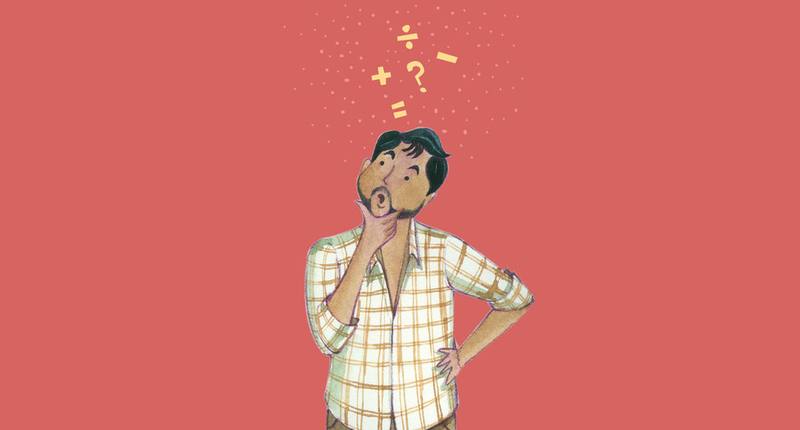
But today was Maths Day.
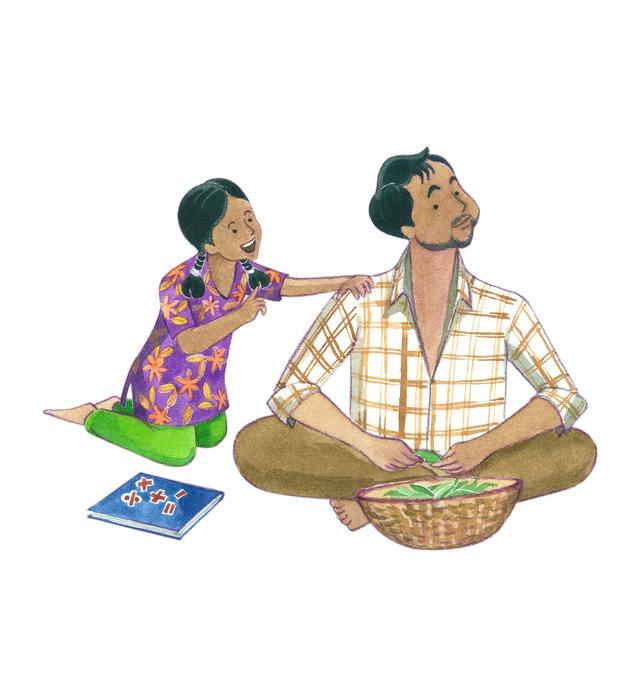
“Pa, you can’t run away from maths,” said Diya.
Pa continued to shell peas.
“Maths is very important, Pa. We’ll be learning division today.”
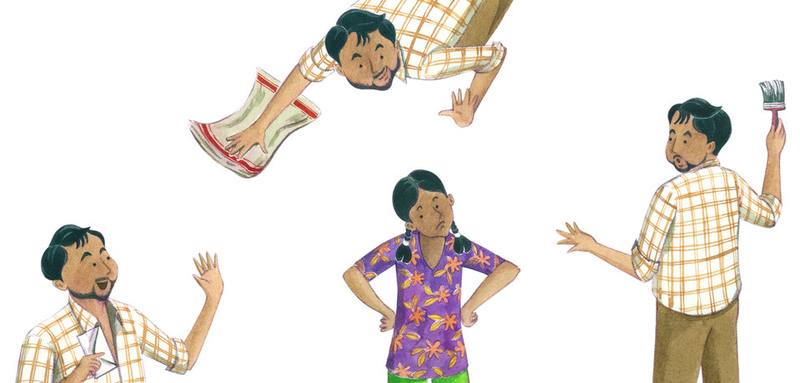
“Diya, I’m busy. Can’t you see?” said Pa.
Pa was always ‘busy’ on Maths Days. He would suddenly have to clean the house or paint the walls or write letters to distant relatives.
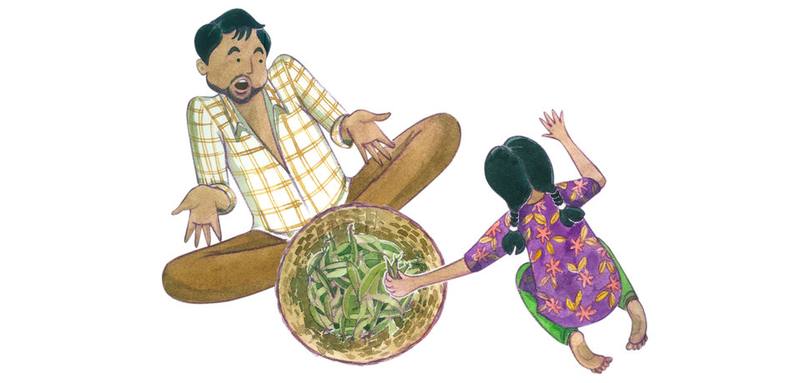
“I have to cook dinner,” said Pa.
“Okay, Pa. I’ll help you. Give me some pea pods,” said Diya.
Pa gave her half the pods.
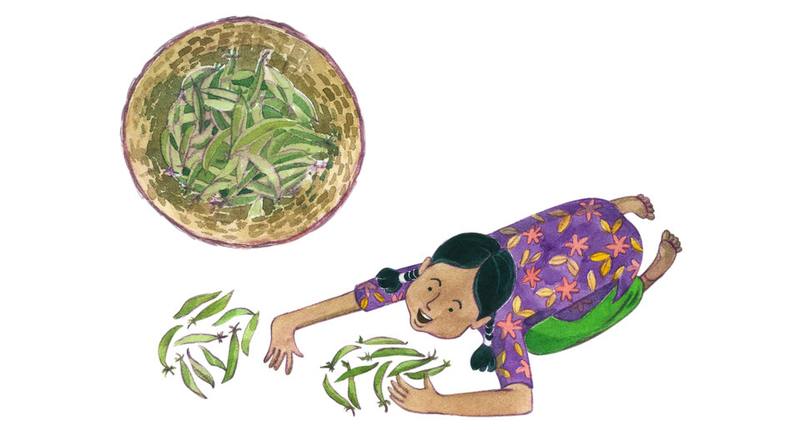
“See, you just did division!” said Diya.
She counted the pods. “There were a total of 20 pods and you divided them into 2 parts. That’s 10 each.”
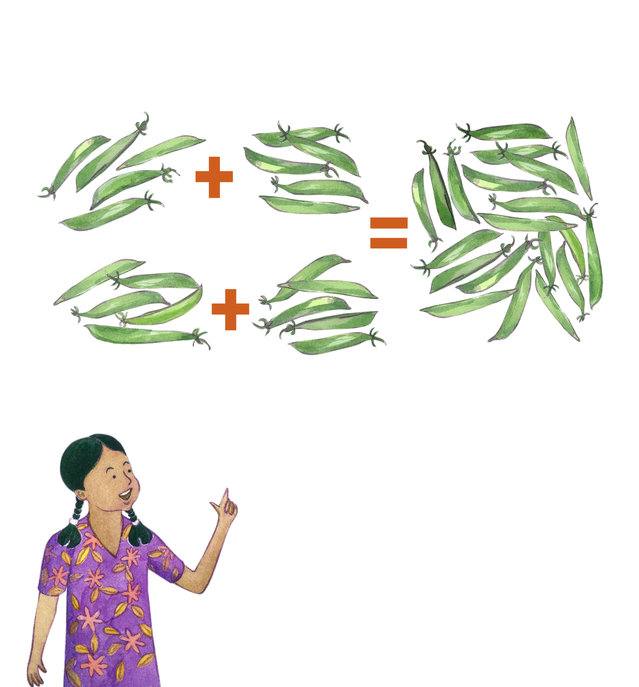
“Now, if I divide 20 pods into 4 equal parts, I’ll get 5 in each. Look,” said Diya as she moved the pods into 4 groups. “So 20 divided by 4 is equal to 5.”
“That’s not difficult,” said Pa.
“No Pa, it’s not difficult. Remember when
Ramu Kaka and you brought back our share of the rice from the farm?” asked Diya.
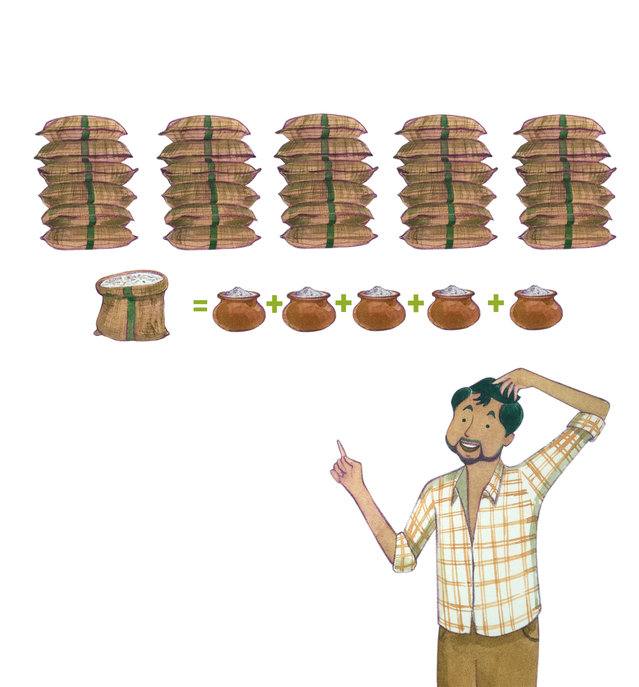
“We divided the sacks, and each of us got 6 sacks,” said Pa.
“Correct. There were 31 sacks in all for 5 families. 30 divided by 5 is equal to 6. And we had 1 sack left, which we poured equal portions of into 5 vessels,” said Diya.
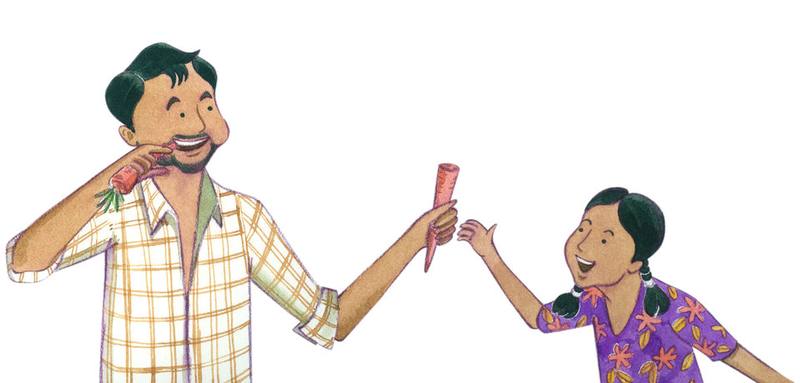
“So, division is like sharing something?” asked Pa.
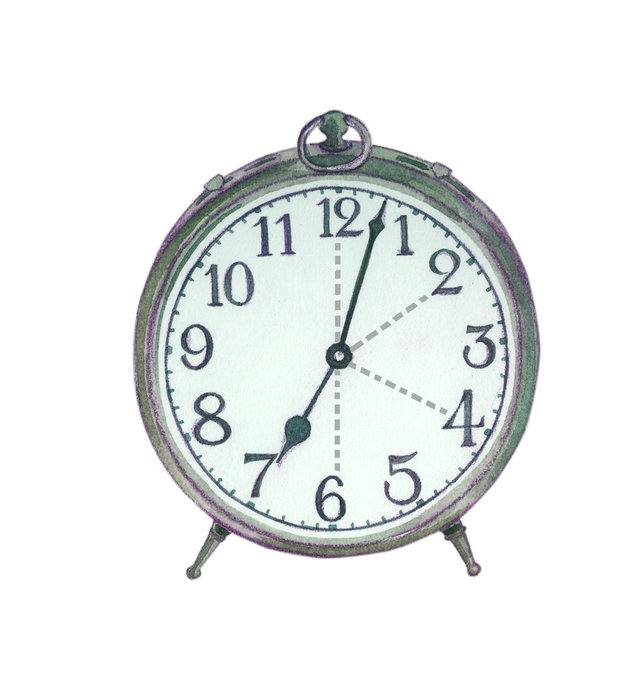
“Yes! Division is exactly that. We can even share time. In the morning, we have 30 minutes to use the bathroom. 30 minutes divided by 3 is 10 minutes. So you, Ma and I each gets 10 minutes. ”
“But you take much more than 10 minutes, and I have to manage with lesser,” frowned Pa.
Diya smiled. “Maybe you’re right. But in maths, division is sharing equally.”
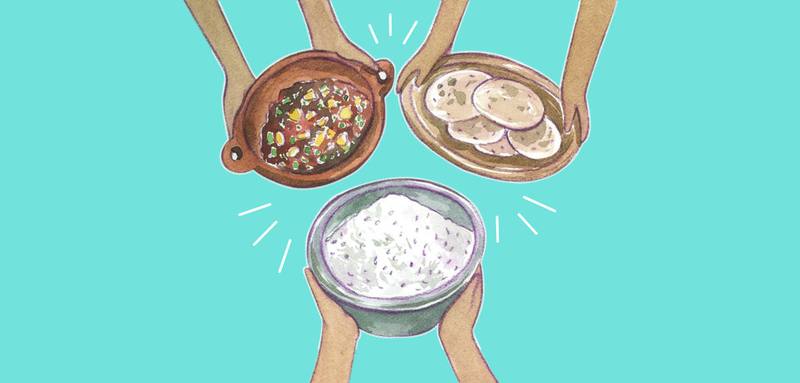
“We can divide work too. If we have to cook 3 dishes for dinner, each of us can cook 1 dish,” said Diya confidently.
Diya saw Pa’s face light up. She felt like she had won a battle.
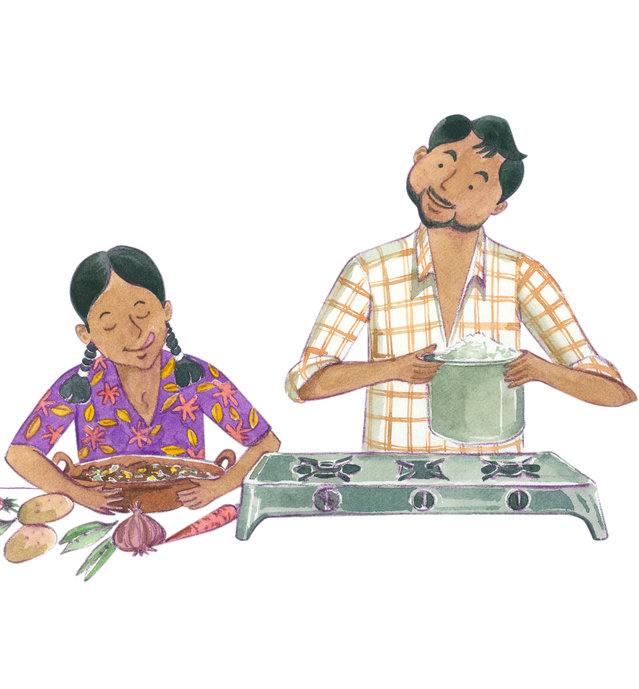
“But today I will cook all 3 dishes,” said Pa, with a mischievous grin. He was hoping to escape the maths exercises that were sure to follow!
Diya laughed. “But I want to cook too! What if we divide the work between us?”
“So I’ll cook one dish and you cook the other. For the third one, we can divide the work between us. Correct, teacher?” asked Pa.
“Correct, student,” replied Diya.
Did You Know?
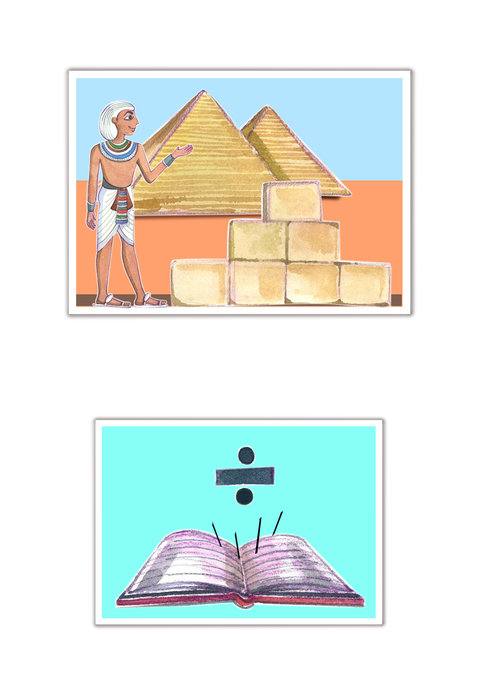
The ancient Egyptians knew how to divide, and are likely to have used division in the planning and construction of the pyramids. However, they didn’t use the symbol that we use, which is called the obelus (÷).
The first use of the obelus as a symbol for division was first seen in a book called ‘Teutsche Algebra’ by Johann Rahn published in the year 1659.
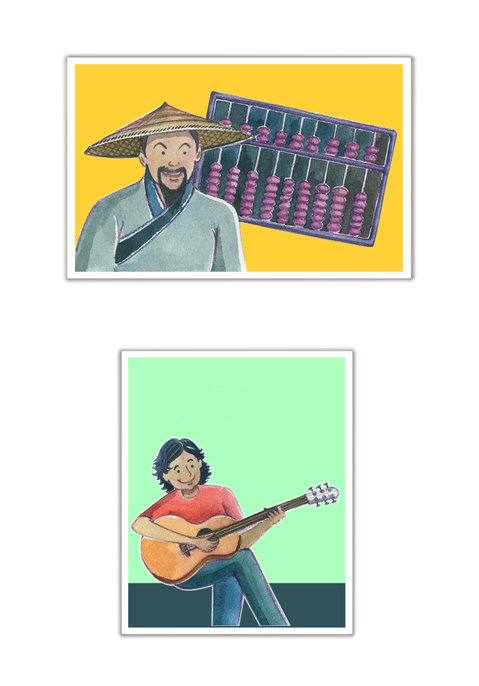
The Chinese used their own version of the abacus called the suanpan (or calculating pan) to do division, until calculators became widely available.
Scientists say that we end up doing maths tasks like division while learning how to play musical instruments such as the guitar or the violin.